.png)
Therapy: Learning Styles
- The M Word

- Mar 17, 2021
- 4 min read
There are 7 known styles of learning, while these are by no means exclusive or the only styles that work. We are all different and all lean in different ways and that is perfectly normal.
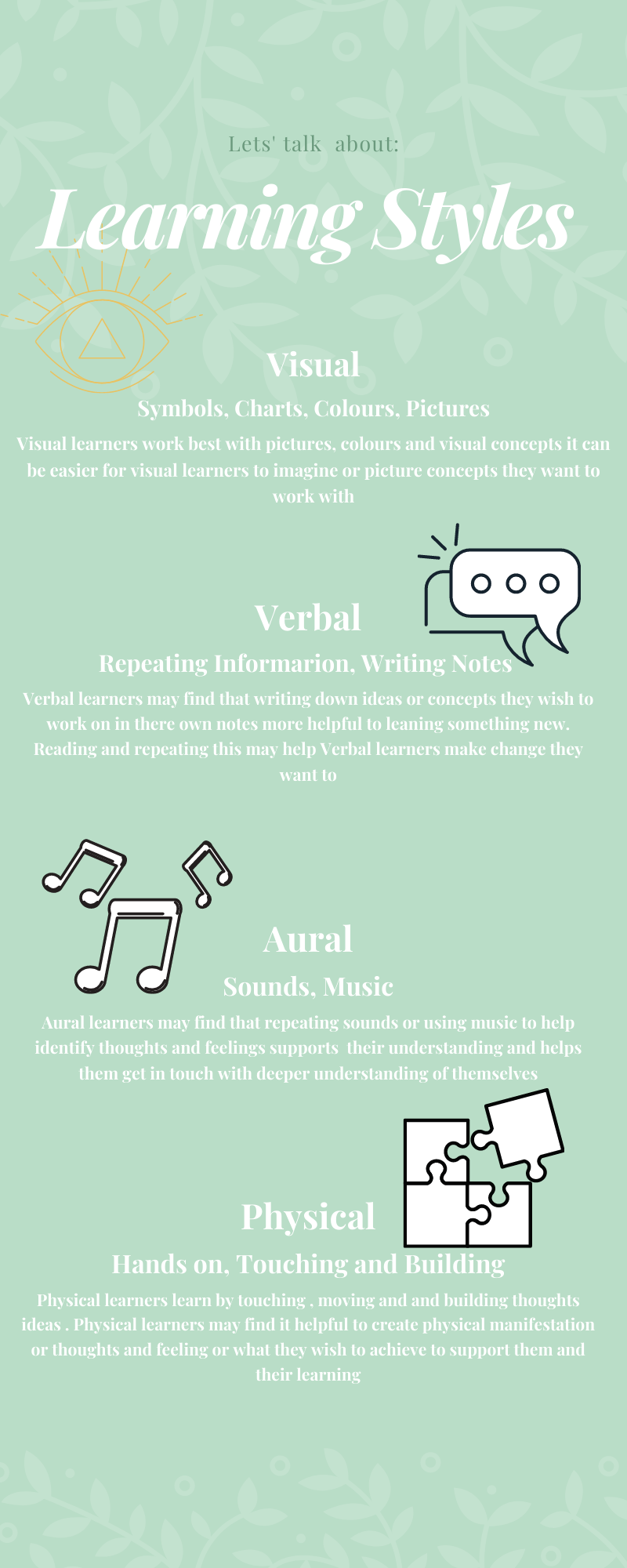
It may however be helpful to consider how you personally work best. In order to get the most out of any mental health support you may wish to try, or any self-help you would like to adapt to make work better for you.
Remember though that something different may work for you, so it can be helpful to try new things. Or you might consider trying a different style than you usually would, perhaps music isn't your usual style of learning but meditating with sound is helpful to you and isn't something you would have considered before. Try to keep an open mind when thinking about trying new practices.
Identifying and becoming more aware of yourself, what works for you and trying different or new things, rather than fitting yourself into a box or style that may have become restrictive.

Personally I have always considered myself to be a mix of both Logical and Solitary learning, this however started to really stunt my emotional growth and ability to expand my understanding.
Most specifically with mindfulness and meditation, I read so much about the topic and how to get the best out of what I hoped mindfulness and meditation would provide me I missed the point of actually doing it and became hopelessly caught up in the 'logical learning' about it.
What really helped me was a suggestion from a friend to incorporate a 'Singing Bowl' to my meditation and mindfulness practice.
The singing bowl sound and vibration help 'guide' meditation in a sense, it enables me to focus on the sound in order to clear my mind of thoughts and unhelpful intrusions.
While the path to meditation and mindfulness isn't always easy at first having something to focus on can really help tune out the negative and tune into the moment.
There are some ideas and values we can take from the concept of ‘learning styles’ to support our mental health and journing to wellbeing. By examining our strengths and looking honestly at areas we would like to improve or change.
We can rely on the ways we know work for us, using our skills and natural abilities: For example reading. We can then focus our attention on the areas we would like to learn more about; journaling for example. We can use our skills and prefered ways of learning to really expand our efforts to try something new.
Especially important to this way of working is the idea of metacognition: or more simply "thinking about thinking."
Analyzing our own thinking and challenging our own thoughts, or simply challenging our own ideas of what we can and can't do can be really helpful in thinking about how we plan our own strategies, engage our own skills and create our own self therapy support tools.
The idea then, is that learning the skill of metacognition or “thinking about thinking” is that we allow ourselves to broaden our thoughts, accept new ideas and challenge things that do not support our wants, needs and growth.
In understanding and using our gained knowledge, skills and preferences as our base or foundation we can build new techniques and learn to try new ideas. Enacting effective methods to support ourselves to engage in a meaningful way of learning new tasks of our well-being.
You can do anything you set your mind to!
Big Picture thinking - "MetaThinking"
By thinking about our thinking and really taking the time to understand ourselves and we learn the best. We can gain a rounded picture of our understanding and learning.
Task:
Look at all the different reasons why you tend to learn the way you do
If you like try the WWWWH method - Worksheets here
What way do I learn best?
Why do I learn best this way?
When do I learn best?
Who helps me, am I better alone?
How did I decide this? Is it the most effective or what I have always done?
Extra Questions to consider:
How you like to learn
How you learn best
Try to think about a variety of different situations, do you feel better with one to one support, or group or alone?
Do you like to learn about something in private first and then build on this knowledge with a class?
Strengths - You have them
Highlight the types of learning that work best for you, and the conditions for learning that support them. For instance, you might be more of an active learner, who operates best in groups. Is there a group you can join for more support, or do you feel like engaging virtually with the community is helpful.
Keep doing the things that give the best results, to keep your learning fast and effective – and look for ways to improve them even more, possibly with complimentary styles, or something new.
Areas of growth
Actively look for opportunities to try out new ways to learn, or to adapt what you usually to to try out something new. You might be surprised about what works – and about the new elements of learning that you enjoy. If you're thinking about trying something new, why not do it, trying a new practice may seem difficult at first when you are learning a new skill.
Meditation for example might not at first glance be your type of thing, but if we look at this as an opportunity to try something different in your journey to well-being it could easily become a new skill you enjoy, a hobby to explore more or an essential tool in your own self therapy.
Awareness
Through questioning ourselves and really thinking about the bigger picture of “us'' we are creating a level of awareness, of yourself, our preferences, our strengths and the areas we would like to develop.
In doing this we have also cultivated our awareness without consciously trying to, this awareness can also help us to communicate with greater impact, with ourselves and others, to and to support ourselves and gain more insight into learning who we are, and what we want, to become our best self.



Comments